Sorry for the lack of bird related posts, but I've been on a bit of a dragonfly and damselfly kick ever since getting my bug net. For anyone interested in getting into dragonflies, there are a lot of books available. For the northeast US, there are several good books available.
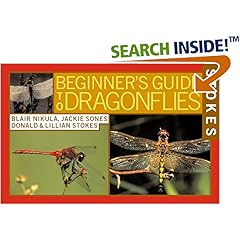 The first book I purchased was the Stokes Beginner’s Guide to Dragonflies by Blair Nikula, Jackie Sones, Donald Stokes, and Lillian Stokes. This is a great, pocket-sized guide specifically targeted to the novice "dragonflier". It includes many dragonflies and damselflies from the whole US. Each species account has large pictures and detailed descriptions with the key field marks bolded. It also includes descriptions of typical behaviors, flight times, and range maps. The inside front cover features a quick reference for each of the dragonfly and damselfly families as well. There are several drawbacks to using this book as your only resource. It doesn't cover as many species as some regional guides and other nationwide guides available. This is especially evident in the damselflies and clubtails. It also doesn't always show pictures of females or juveniles for many species. Other than these drawbacks, it is a phenomenal book.
 The second book I purchased was Dragonflies Through Binoculars by Sidney W. Dunkle. Being a HUGE fan of Glassberg's Butterflies Through Binoculars series, I thought this would be an excellent choice. The guide includes every dragonfly species that occurs in the US, but does not include the damselflies. The format of this book is similar to the other books in the series. It features phot plates with short descriptions of each photo accompanies by a small range map. The short descriptions highlight the important field marks of each species. Each photo links back to a detailed write-up of that species. The write-ups include a lot of detail on field marks, behavior, life history, and similar species. Like the "Butterflies" book, they also feature interesting notes about some species such as the origin of their names. I commend the author for using a lot of interesting language and some humor to help make the book an interesting read. This book does have one huge drawback - the photos. The photos are just too small and difficult to see. Distinguishing similar species through the photos is next to impossible in some cases. The photos also do not have any kind of scale to them, so distinguishing size can only be done by reading the write-ups. These drawbacks have earned this book a place on my shelf and not in my field pack. It is definitely best used as a reference.
 The most recent book I bought is A Field Guide to the Dragonflies and Damselflies of Massachusetts by Blair Nikula, Jennifer L. Loose, and Matthew R. Burne. Although restricted to Massachusetts, the book is applicable, for the most part, to NJ and most of the northeast. This guide is much more detailed than the two discussed above. Each species is given very detailed descriptions, multiple large pictures including females and juveniles, as well as descriptions of similar species. Flight times are displayed on a graphical calendar for easy reference. Unlike the above book, it also includes a ton of information on damselflies. The damselfly section is very in-depth and includes a lot of critical information on separating the difficult species. Summary pages on the abdominal appendages and eyespots for the bluets are especially helpful. The authors have included a horizontal bar at the top of each species account that is the exact size of that species, which is extremely useful. The spiral binding and glossy paper make this an easy book to bring into the field. You can tell that the authors put a lot of time into this book and it has paid off.
A final book that I do not own is Ed Lam's Damselflies of the Northeast. I've seen this book and it is THE authority on damselflies for my area. There are stunning, detailed paintings of every species and lots of great technical information. I hope to get this book soon.
So, if you haven't delved into the world of "odes" yet, hopefully one of these books can get you on your way.

 My friend Donna was the first person that I've heard refer to a bird as looking like a stuffed animal. When she said this, she was referring to a unique bird - the
  Every day on my way to and from work (my whopping 6 minute commute), I pass a grassy field that always has several